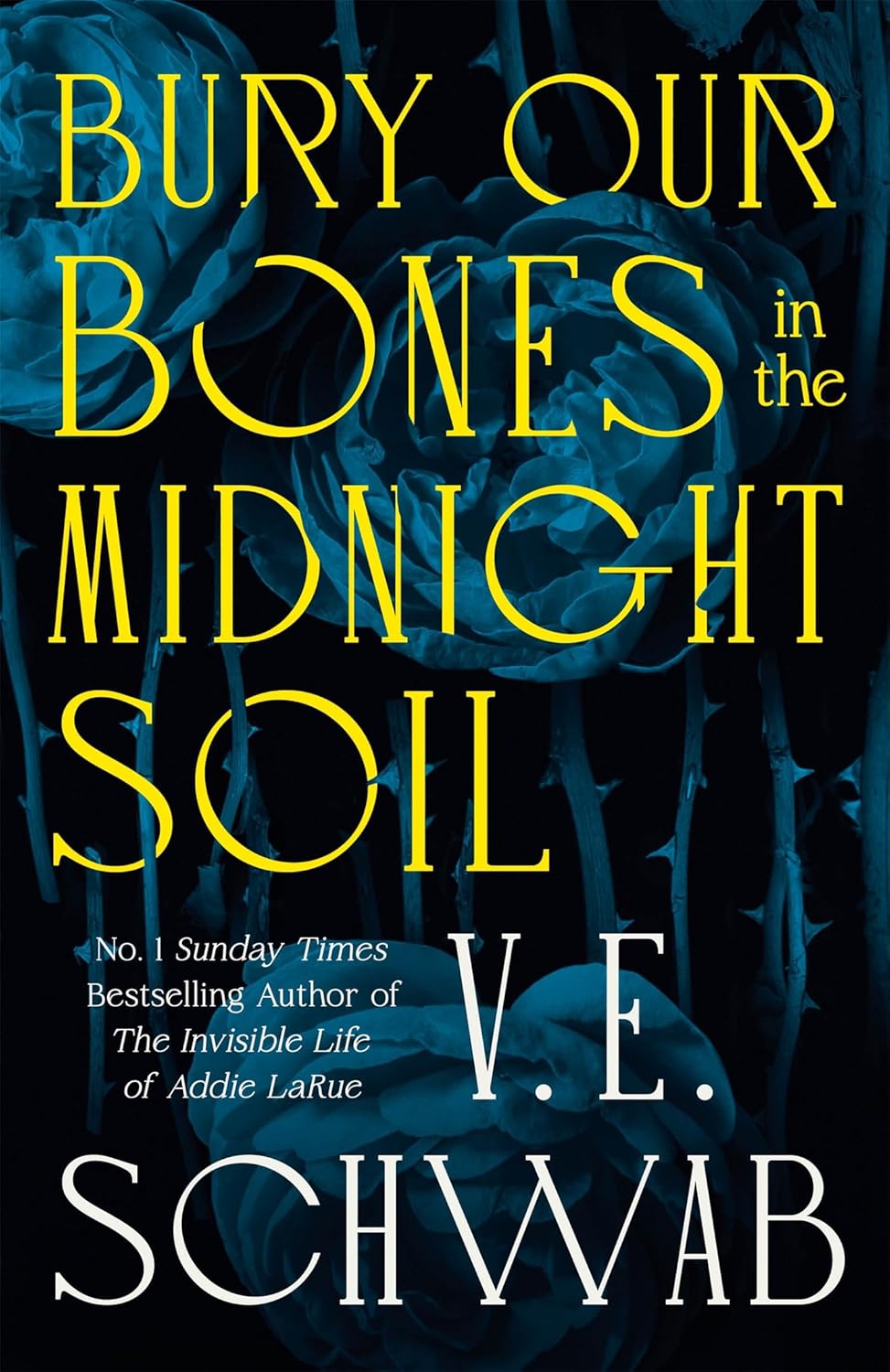
V.E. Schwab is a writer whose prose often feels less like reading and more like sinking into atmosphere. Bury Our Bones in the Midnight Soil is no exception. Lush, tactile, and steeped in shadow, the novel delivers a moody meditation on identity, longing, and the cost of survival. While I found myself deeply engaged by the language and themes, the book ultimately left me wanting more from its characters and less certainty in its conclusion.
At its core, Bury Our Bones in the Midnight Soil follows characters grappling with the tension between who they are, who they have been, and who they might yet become. Schwab weaves together timelines and perspectives to explore how trauma, desire, and love shape a life across years—sometimes across centuries. The plot unfolds deliberately, favoring emotional resonance over momentum, and invites the reader to linger in moments rather than rush toward resolution.
This approach is both the novel’s greatest strength and its most limiting factor. Schwab’s prose is undeniably beautiful—lyrical without tipping into excess, rich with sensory detail, and often quietly devastating. Sentences feel carved rather than written, and the voice is confident, intimate, and steeped in melancholy. The tone is reflective and somber, with an undercurrent of yearning that hums beneath nearly every scene. If you read Schwab for vibes (and many of us do), this book delivers in spades.
Plot-wise, however, the novel moves along well-worn thematic paths. The story’s central conflicts—around immortality, love, self-erasure, and reinvention—are familiar territory for Schwab, and while they are handled with care, they rarely surprise. The pacing is measured to the point of predictability, and by the final act, the destination feels inevitable. The ending arrives exactly where the narrative has been pointing all along, offering emotional closure but little narrative tension. For a novel so invested in transformation, the resolution feels almost too tidy, as though the story chose reassurance over risk.
Character development is where the book falters most noticeably. While the protagonists are emotionally sketched and conceptually compelling, they never quite deepen beyond their defining traits and wounds. Their inner lives are articulated beautifully, but they remain somewhat static, circling the same emotional truths without evolving in unexpected ways. I wanted messier contradictions, sharper turns, and moments where the characters surprised me—not just aesthetically, but psychologically. As it stands, they feel more symbolic than fully realized, more vessels for theme than people who breathe on the page.
Thematically, Bury Our Bones in the Midnight Soil is rich and cohesive. Schwab explores the cost of endurance, the ache of loving across time, and the quiet violence of being unseen. There is a recurring emphasis on what we bury—memories, identities, desires—and what inevitably resurfaces. These ideas are thoughtfully interwoven and resonate long after individual plot points fade. Still, the themes are familiar enough that longtime Schwab readers may experience a sense of déjà vu.
Overall, this is a novel that excels in craft but plays it safe in execution. I admired it more than I loved it. The prose is stunning, the atmosphere immersive, and the emotional intentions sincere. Yet the predictable ending and underdeveloped characters kept it from reaching the emotional depth it clearly aspired to. Bury Our Bones in the Midnight Soil is a solid, contemplative read—one that confirms Schwab’s strengths as a stylist, even as it highlights her tendency toward narrative comfort.
A beautiful walk through familiar shadows—but I was hoping for a darker turn.
